Ikebana is an art form dating back over half a millennia. While codified in Japan, its circuitous origins lie in Buddhist and Hindu traditions as offerings to a variety of metaphysical beings. Its transient nature has the practice predominantly disseminated through classroom environments and printed matter. This slippery material form, at certain points meant to depict otherworldly beauty approximate to what one sees upon entering Nirvana, has evolved greatly over the centuries as a result of economic shifts, changing hegemonic structures, international trade, advancements in horticultural sciences and metalworking technologies, the introduction of Modernism, war, among other forces, still.
After centuries of rule-based and diagrammatic arrangements, the early 20th century saw the introduction of ‘freestyle’ ikebana, an approach that liberally mixes tradition with idiosyncratic and improvisatory impulses. This new offshoot, only taking hold mid-century, helped lay the groundwork for developments in the practice that defined the avant-garde, post-avant-garde, and contemporary modes of arranging, and introduced a wide set of material and philosophical concerns with the rapidly changing medium. With the temporal nature of the medium limiting physical widespread exhibition,
...
show more
Ikebana is an art form dating back over half a millennia. While codified in Japan, its circuitous origins lie in Buddhist and Hindu traditions as offerings to a variety of metaphysical beings. Its transient nature has the practice predominantly disseminated through classroom environments and printed matter. This slippery material form, at certain points meant to depict otherworldly beauty approximate to what one sees upon entering Nirvana, has evolved greatly over the centuries as a result of economic shifts, changing hegemonic structures, international trade, advancements in horticultural sciences and metalworking technologies, the introduction of Modernism, war, among other forces, still.
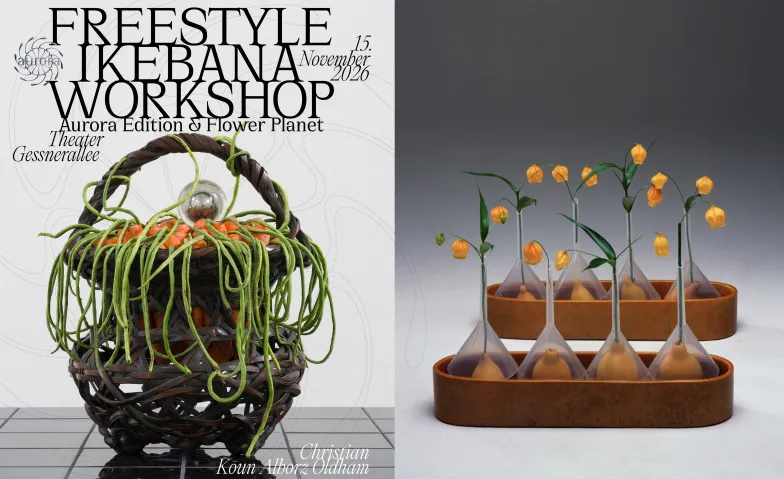
After centuries of rule-based and diagrammatic arrangements, the early 20th century saw the introduction of ‘freestyle’ ikebana, an approach that liberally mixes tradition with idiosyncratic and improvisatory impulses. This new offshoot, only taking hold mid-century, helped lay the groundwork for developments in the practice that defined the avant-garde, post-avant-garde, and contemporary modes of arranging, and introduced a wide set of material and philosophical concerns with the rapidly changing medium. With the temporal nature of the medium limiting physical widespread exhibition, and international book distribution on the practice slowing from the 1970s onwards – arguably at the medium’s peak – there’s little contemporary understanding or availability of just what sort of evolutions were taking place.
This three-hour introductory workshop, intended for all skill levels, helps to bridge this gap. With a selection of rare publications on-hand, and a historical overview opening the gathering, participants are able to initiate themselves and try their hand in this newer approach to the medium. Participants are expected to bring along some materials for the workshop that will be specified in an e-mail sent out after signing up.
show less